Successful Data Recovery from Hard Drives with Failed Spindle Motors
One of the less common (but highly specialized) types of hard drive recovery involves replacing a failed or seized spindle motor. When the motor that spins the platters stops working, the drive can no longer read or write data, even though the information stored on the platters may still be perfectly intact.
At PC Warehouse, we have successfully recovered data from hard drives suffering from spindle motor failures by performing a motor replacement as part of the recovery process.
What Does the Spindle Motor Do?
Inside every traditional hard disk drive is a precision spindle motor. Its job is to rotate the platters at a constant speed, typically ranging from 5,400 to 15,000 RPM, depending on the drive model.
The read-and-write heads rely on this precise rotation to locate and retrieve data. If the motor cannot spin the platters, the drive cannot initialize and the stored files remain inaccessible.
Unlike a desktop fan or electric motor, a hard drive spindle motor is manufactured to extremely tight tolerances. Even microscopic variations can affect the drive's ability to read data accurately.
Symptoms of a Failed Spindle Motor
A spindle motor failure often produces symptoms that can easily be mistaken for other hard drive problems. Common signs include:
- No spinning sound: The drive receives power but the platters never begin rotating.
- A faint humming or buzzing noise: The motor attempts to start but cannot overcome internal resistance.
- The drive is not detected: Because the platters never reach operating speed, the drive cannot complete its startup sequence.
- The drive appears completely dead: There may be no clicking sounds because the heads never begin normal operation.
These symptoms can also be caused by electronic failures, firmware issues, or damaged heads, which is why a professional evaluation is important before determining the appropriate recovery procedure.
Why a Motor Replacement Is So Challenging
Replacing a spindle motor is one of the more technically demanding procedures in professional data recovery.
The platters inside a hard drive contain the customer's data and must remain in exactly the same alignment throughout the entire procedure. Even the slightest rotational shift between platters can make portions of the data unreadable.
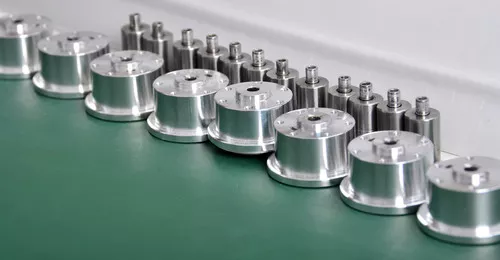
Because of this, the platters cannot simply be removed individually and reinstalled. Specialized tools and techniques are required to transfer the entire platter assembly while maintaining its precise orientation.
The replacement motor must also come from a carefully selected compatible donor drive to ensure proper mechanical alignment and operation.
The Recovery Process
Although every case is different, a spindle motor recovery generally involves several carefully controlled steps:
- Diagnosing the failure to confirm the motor is preventing normal operation.
- Selecting a compatible donor drive with matching mechanical characteristics.
- Transferring the platter assembly while preserving the exact alignment of every platter.
- Installing the platter assembly onto a functioning donor motor.
- Verifying proper operation before attempting to read customer data.
- Creating a sector-by-sector copy of the drive to minimize additional stress on the recovered hardware.
- Recovering the customer's files from the cloned media.
The objective is never to permanently repair the original hard drive for continued use. Instead, the drive only needs to function long enough to safely recover the stored information.
Why Immediate Action Is Important
If a spindle motor has seized or begun to fail, repeated attempts to power on the drive are unlikely to restore operation. In some situations, additional startup attempts may place unnecessary stress on other internal components.
If your hard drive shows signs of a motor failure:
- Stop powering the drive on.
- Do not strike or tap the drive. Older internet advice suggesting this can permanently damage the platters or read heads.
- Do not freeze the drive. This long-standing myth does not repair motor failures and may introduce condensation that causes additional damage.
- Do not open the drive. Internal components require specialized tools and a controlled environment.
- Have the drive professionally evaluated. Proper diagnosis determines whether the problem is truly the spindle motor or another type of failure.
A Failed Motor Doesn't Always Mean the Data Is Lost
A seized spindle motor prevents a hard drive from operating, but it does not automatically mean the information stored on the platters has been destroyed. In many cases, the magnetic data remains intact even though the drive itself can no longer function.
Motor replacement is one of the more advanced procedures performed in professional data recovery because it requires specialized equipment, compatible donor hardware, and extremely precise handling of the platter assembly. When performed correctly, it can provide access to data that would otherwise appear permanently lost.
At PC Warehouse, we have successfully recovered data from hard drives with failed spindle motors by carefully transferring the platter assembly to a compatible donor motor. While every recovery is unique and no outcome can ever be guaranteed, this type of recovery demonstrates that even severe mechanical failures do not always mean your valuable data is gone.